POLESTAR
245kW 92kWh Rear Motor 5dr Auto
£69,925
Looks great, is spacious, now drives and charges better than ever
Prices aren’t low, the screen is still frustrating
It’s the third Polestar, if the name didn’t already imply. Polestar is part of the Geely Group, like Volvo and Lotus, and is Chinese-built but Swedish-headquartered. And the smart, consistent font used across all its bumf and interior displays speaks of a European design eloquence.
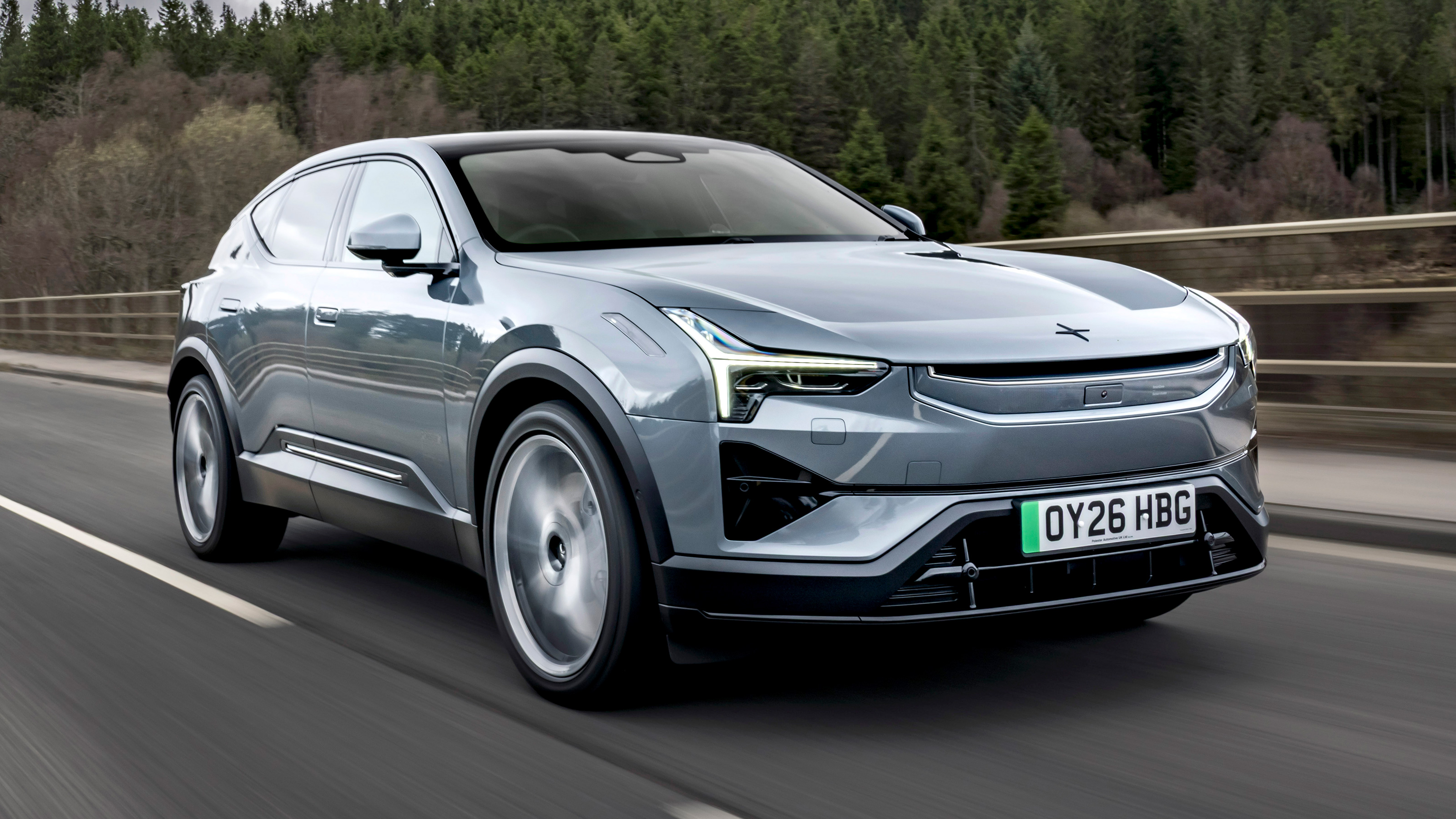
Launched in 2024, the Polestar 3 is a five-seat, fully electric SUV. For size, power and position, think BMW iX and Jaguar's departed I-Pace. It’s also in the realm of the Mercedes EQE SUV, the more practical, six- or seven-seat Hyundai Ioniq 9 and Kia EV9, and its Lotus Eletre distant cousin. Then there’s a bunch of electric Macans and Cayennes from Porsche. These sorts of cars may nudge (or surpass) £100k before surrendering a large chunk of that value on the used market, but everyone seems to want one in their showroom nonetheless.
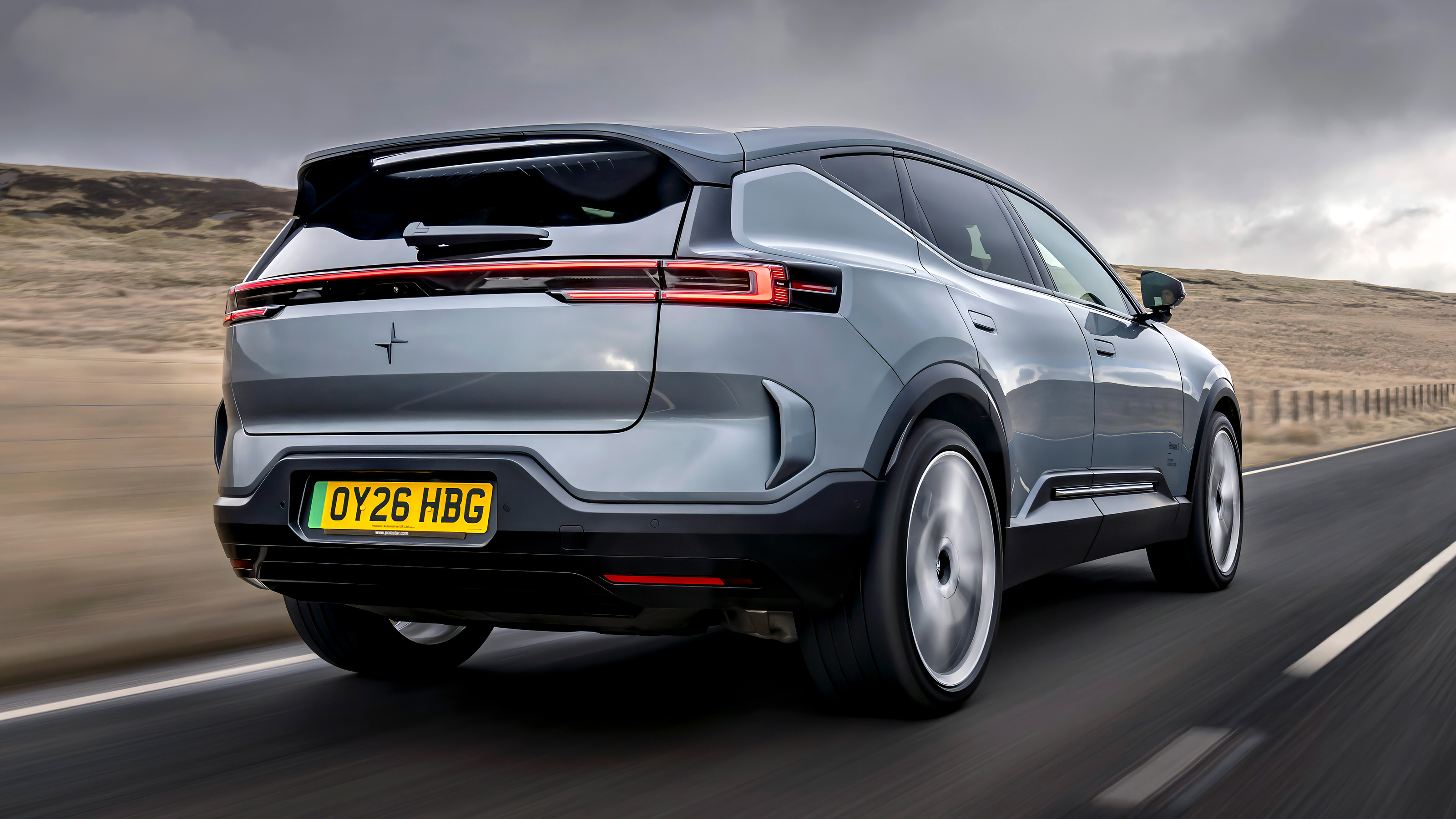
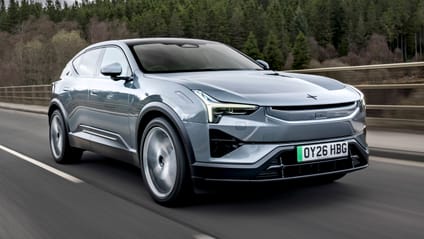
And the Polestar 3 feels properly premium and rocks tonnes of kit, wrapped in some really quite expressive styling. The sleek, lowish roofline and crisp, clean surfaces remove it from the brash look of established fast-petrol SUV players. So does its minimalist cabin (in good and bad ways). It's a fairly low-drag shape too, with some subtle touches to further that. Those include an S-duct in the bonnet like an I-Pace (or an old Ferrari 488 Pista).
Launched in 2024 with 400V battery architecture and peak power of 510bhp (for 0-62mph in 4.5 seconds), the Polestar 3 has actually just had a major, under-the-skin refresh. Nothing changes about its neat design up top – rare in car facelift terms – but the batteries, motors and computing power beneath have had a major scrub-up to help keep the 3 competitive in an increasingly bustling market. Its new 800V core allows much spritelier charging to keep pace with BMW’s Neue Klasse and its Hyundai group rivals.
The range kicks off a wee bit pricier than before, though healthy discounts on the Polestar configurator currently haul its RRPs back down. The range starts at a mite over £70,000 for a 329bhp single Rear Motor car which deploys a 92kWh battery for a claimed 374 miles of range. It’ll hit 62mph in 6.5s and charge at up to 310kW on a rapid DC charger.
Another eight grand gets you the Dual Motor, with its 536bhp peak, 106kWh battery (with 350kW charging capability), 402 miles of range and a 4.7s sprint to 62mph – just two tenths off the old Performance.
The updated Polestar 3 Performance lifts things to a whole new level entirely, its dual-motor setup peaking at 670bhp (the realm of very recent McLaren supercars…) and extracting 373 miles from the same 106kWh battery. Just don’t expect to achieve that if you’re testing its 3.9s acceleration claim. That nudges over £90k in the brochure, though you’ll currently score one for £87k.
Polestar started as Volvo’s funkier cousin, and the Polestar 1 and Polestar 2 were rebadged Volvo designs. Now they've moved apart a bit, but even so the common ownership brings the SPA2 (scalable product architecture) platform also used in Volvo’s EX90. It's a bespoke EV set of bones, but the sleek 3 comes as a five-seat only where the EX90 is a more pragmatic seven-seater.
The mostly recycled interior is techy, spacious and lovely, the driving experience rapid but calm. There’s air suspension (on twin-motor cars), adaptive damping and loads of advanced driver assistance. Also lots of space.
Polestar proudly shouts about how different it is to everyone else. ‘No legacy,’ the blockbuster teaser video at the updated 3 launch tells us. ‘No hybrids. No fake engine noise. No conquering Mars.’ It’s clearly tuned to compete with certain rivals, but it wants to maintain some polite distance from them too. Part of its ‘no legacy’ schtick is an utmost focus on sustainability, including the publishing of the full carbon footprints of its cars’ manufacturing cycles. The claimed cradle-to-gate CO2 emissions of each model is around 25 tonnes, the simpler Rear Motor car naturally thriftiest in this regard. On UK electricity, a 3 could repay its manufacturing debt versus a big petrol SUV in less than two years' driving.
It feels lighter and more sprightly in turns than most big SUVs do, even in gentle driving. Turn up the wick, as all that power allows you to, and it doesn't go to pieces. While the torque-vectoring of earlier cars is absent post-facelift, its rear-biased power still pivots it through and out of a corner with little apparent effort.

It’s also not slow, whichever version you choose, though crucially every version has a progressive throttle that makes its performance genuinely enjoyable and easy to moderate (the former hugely reliant on the latter in any car). You can potter around serenely most of the time, then deploy its vast potential when the road conditions allow. Unlike a Volvo, these aren’t limited to 112mph, the topmost versions claiming a 140mph top speed. And yep, there’s no fake sound or gears to accompany your progress – just hushed calm.
There’s calm and considered exterior design, excellent physical build quality, and conscious and thoughtful manufacture. No, a 2.5-tonne electric SUV isn’t going to save the environment, but if it must exist (even sustainable car companies need to turn a profit), you might as well be careful about how you do it. Anyway, it's far better over a lifetime than the combustion equivalent.
Inside it generally feels expertly premium without being flashy or overblown. Design is the thing that'll hook buyers in. It also drives with a kind of calm authority which many people will appreciate; long-legged and comfy, but perfectly capable should you wish to go faster. Again, not necessary for a big SUV, but welcome.
But you must try the central interface before you buy, as you may find the menu-based systems wildly frustrating on the move. Most rivals are guilty of the same thing, of course, and if this early but heavy refresh of the car’s tech is anything to go by, Polestar is perfectly willing to adapt to what buyers actually want. And it’s arguably a minor issue in the grander scheme of an EV that looks so good, drives so well and instils such a feeling of calm when you aren’t navigating its sub-menus.
Get all the latest news, reviews and exclusives, direct to your inbox.