52
New cars are more expensive than ever, so we’ve rounded up 29 used alternatives. You might even want to take some of them seriously
The Alfa we waited literal decades for – stunning to behold and with a stonking engine, and every bit as good to drive as its German rivals – the appeal of the Giulia Quadrifoglio has only grown over the years, as said rivals have become heavier, more complicated and magnitudes more gopping. Sadly, the Quad’s price has grown, too.
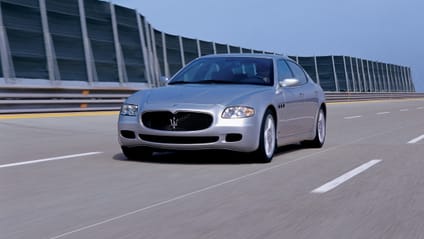
Happily, for a good £80k less than a brand-new Quad will cost you these days, you can get yourself the last Italian hyper-saloon to dynamically equal the Germans while blowing their charisma out of the water – the Ferrari V8-powered, transaxle-gearboxed, almost deliriously cool Maserati Quattroporte V. You’ll want a big contingency fund, mind. Our advice? Do it. Save us from ourselves.
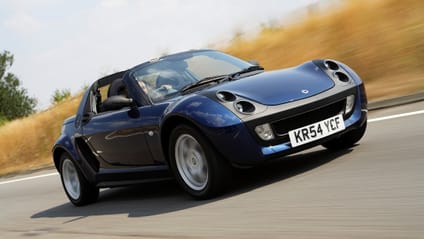
The Alpine A110 is a left-field mid-engined sports car unlike anything else concurrently on sale, with a small displacement turbo engine, gloriously communicative handling and an unwavering dedication to saving weight, whose only real dynamic flaw is the lack of a proper manual gearbox. Gordon Murray, father of the McLaren F1, even daily drives one.
The Smart Roadster was a left-field mid-engined sports car unlike anything else concurrently on sale, with a small displacement turbo engine, gloriously communicative handling and an unwavering dedication to saving weight, whose only real dynamic flaw was the lack of a proper manual gearbox. Gordon Murray, father of the McLaren F1, even used to daily drive one. We rest our case.
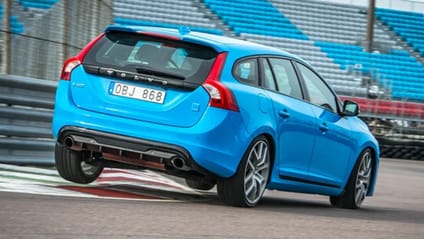
Six generations and nearly 40 years into its lifespan, BMW finally decided it would bother doing what many had been asking it to for years and offer an M3 Touring. Rather superb it is, even if the current auto-only, all-wheel drive, turbocharged M3 is further removed from the zingy, lightweight original than ever.
If you’re wedded to the idea of a small-ish, turbocharged, straight-six, all-wheel drive estate car but not necessarily to the idea of a BMW, though, Volvo has your back. Or rather, had. While it won’t be anything like as engaging to drive as a brand new M3, the rare T6 version of the first-gen V60 still packs a handy 300bhp, a 6.2-second 0-62mph run and a 155mph top speed – exactly the same as the Beemer. Unless you tick the option to delimit it.
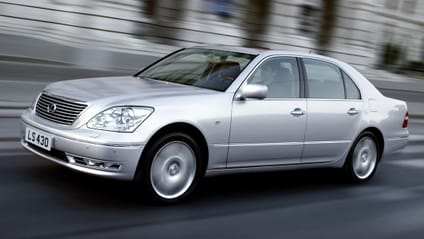
You want a big, ultra-wafty luxury saloon, but don’t want to go down the route of the obvious German brands. Pretty much your only choice in Europe these days is the electric Genesis G80. Thankfully, it’s a good ’un: superbly comfy and refined, and beautifully made. You’d better be ready to shell out serious cash for something most people still just see as a posh Hyundai, though – if they even know what it is in the first place.
25 years ago, the Lexus LS 430 was filling much the same niche as the G80. Like the Genesis, it comes from the luxury wing of a mass-market Asian manufacturer, and features exquisite comfort and build quality. Legendarily reliable, too. Granted, it only came with a 4.3-litre V8, so you’re not getting the same eco-cred as the G80, but with used prices starting at around £4,000, you’ll at least have a bit left over for petrol.
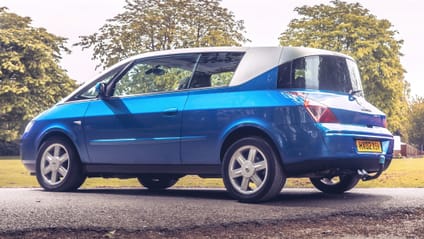
The DS No 8 is by far the most convincing effort so far from Posh Citroen. It’s nice to drive, supremely comfortable and packs a massive EV range, while still being palpably different from the usual premium crop and slightly mad in the way only big French cars can be. Sadly, big, weird French cars have traditionally sold in Britain like whatever the opposite of hot cakes are. Cold biscuits?
If that’s the case, then the Renault Avantime is a Hobnob that’s been left in the freezer. Like the No 8, it was a French brand’s attempt to tempt people away from the usual suspects with a shape like nothing else on the road – in this case, a fever-dreamish coupe/people carrier mashup. Inevitably, it flopped, with fewer than 500 sold in Britain, but it’s now a bargain cult classic for fans of French luxury madness.
The UK car market has undergone some dramatic shifts in recent years, but one thing remains constant: the British public’s love of a small Ford. The Puma’s been Britain’s best-seller for three years on the bounce, and why not? It’s practical, good to drive, affordable – basically all the stuff we’ve always liked about Ford.
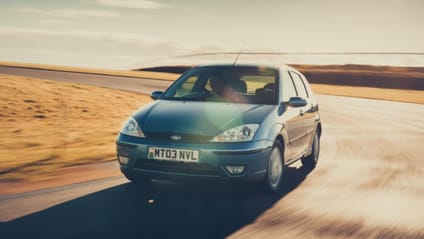
Wind the clock back 25 odd years, and this was the Puma of its day (notwithstanding the actual Puma from 25 years ago). With its sparkling chassis and daring styling, the original Focus was the shot in the arm the family hatch sector needed. It remains a shining example of how to make a regular, everyday car brilliant. They’re fast disappearing from our roads, but you can still snap one up for three figures. You should.
The reborn Honda Prelude isn’t the sort of sports car you’re going to drive like an angry ferret’s just run up your trouser leg, but to even be getting an honest-to-goodness new coupe in 2026 is one of the biggest breaths of fresh air in the car market in years, especially when it looks this good. Even so, it’s not the ’90s anymore, so if you want one, you’ll be handing over the wrong side of £40k.
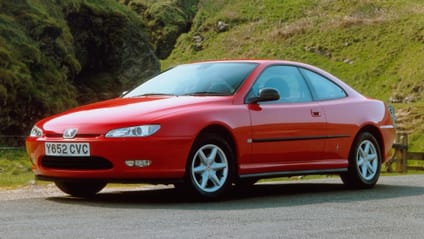
If it was the ’90s, then handsome coupes would be 10 a penny, and all these years later, the Peugeot 406 Coupe still stands out as one of the best. Like the Prelude does today, it took humble underpinnings, threw enough chassis tweaks at them to add a little handling sparkle, and clothed them in a devilishly pretty body. A decent 406 Coupe, though, will cost you a good 10 times less.
It may fly in the face of what the sheep-carrying, interior-hosing-out faithful think the model should be, but there’s no denying that Land Rover struck gold with the new Defender. It looks brilliant, it’s well-suited to daily life, and like one of those watches that’ll still work at the bottom of the Mariana Trench, the off-road chops are there, even if most owners will never use them.
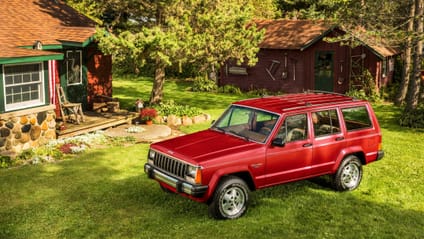
The foundations for the modern Defender were laid by the XJ Cherokee over four decades ago. Like the Landy, it looks all rough and tumble and indeed, if you point it at an off-road trail, it’ll more than likely handle itself, but the unibody construction means it’s amenable to doing regular car stuff too. Luxury and refinement have come a long way in 40 years, but from as little as £3,500, it remains an SUV bargain.
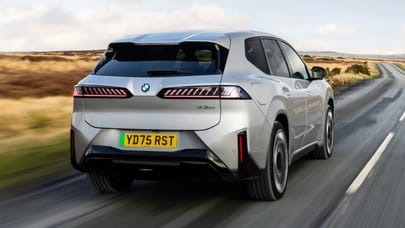
The new BMW iX3 genuinely felt like a levelling-up moment for electric cars. Certainly, with its potential 500-mile range, ultra-slick interior and ‘Heart of Joy’ central processing brain that helps maintain an inherently BMW-ish feel, it’s now the standard to which all mid-size electric SUVs will be held.
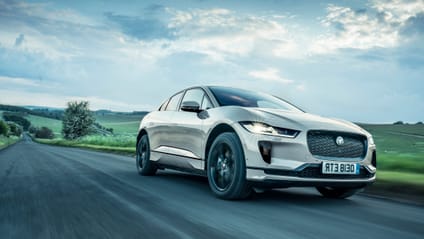
We know depreciation has hit posh EVs hard, but it still feels remarkable that you can get a good-condition Jaguar I-Pace for considerably less than a brand new base model Dacia Sandero. When it arrived in a still-fledgling EV market in 2018, it felt like as big a leap forward then as the iX3 does now, and even eight years later, it almost feels more futuristic than what Jag has planned for its actual future.
In a world full of SUVs and crossovers trying to be things they’re not, the Dacia Duster feels wonderfully honest and unpretentious, and that really counts for a lot, especially when it starts at just £21,845. In 4x4 guise, it’s a genuinely capable little thing off-road too, only adding to its charm.
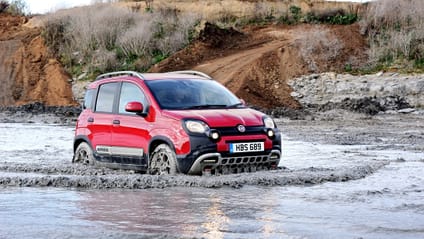
Of course, even a bargain new off-roader like the Duster is still out of the reach of many. Compromise on space, though, and the Fiat Panda Cross represents a seriously tempting used alternative. Like the 4x4 Duster, you get rugged bulldog puppy styling and genuine off-road capability, and its diminutive dimensions mean you’ll be able to zip around town even more effortlessly.
The funky saloon is seeing a bit of renaissance in the EV world, thanks to the body style’s aero properties, and they don’t come much funkier or aero-er than the Hyundai Ioniq 6. In fact, a big, comfortable, aero-optimised four-door with slightly divisive styling that sets it apart from the norm, and is a relatively rare sight on the road… what is this thing, French?
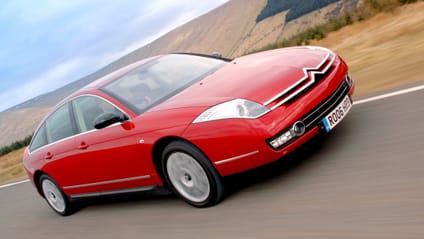
No, it’s not, but the Citroen C6 most definitely is. They may be powered by different fuels, come from different continents, and be separated by nearly 20 years, but the similarities between the Ioniq 6 and C6 are remarkable, from their comfort over handling approach to their swoopy, aero-optimised shapes. They even both have ‘6’ in their name. Okay, that’s probably just a coincidence.
Hopefully, we don’t need to remind you of the GR Yaris’s excellence. It’s nothing short of a triumphant return to the golden age of the rally-bred Japanese performance car. However, over the years, it’s become increasingly tricky to get hold of new, and ever pricier – the most recent version, the Aero Performance, cost an eye-watering £49k.
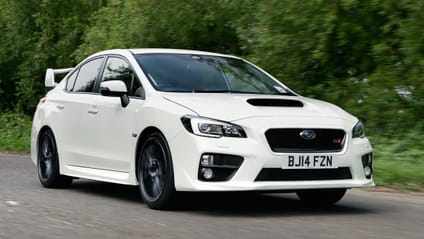
You don’t have to go back too far to find a time when cars like this were far more common. The final generation of Impreza WRX before the two badges were split off into separate models is hardly the most beloved, and it wouldn’t see which way a GR Yaris went, but from around £5k, you’re getting a lot of the same spirit, plus solid performance and that evocative boxer burble.

Although it’s still considerably cheaper than, say, a BMW M4, the UK-market Ford Mustang GT is hardly the blue collar hero it traditionally has been in the US. You’ll need at least £58,670 to get into one new, but then it is the only car left in Europe that allows you to pair a nat-asp V8 with a manual gearbox. Yee haw.
The Mustang is still comparatively new to the UK market, and before it, the closest equivalent was the Vauxhall Monaro. An Australian car with an American engine and a British badge, prices for this globe-spanning muscle car have been steadily creeping up for the last few years, but around £10,000 can still get you into a decent one, and there’s not much else that’ll tick the same boxes for that price.
Polestar may be a Volvo spinoff, but its cars feel sufficiently different and left-field for it to somewhat fill the void left by that other dearly departed Swedish carmaker, Saab. Had things gone a little differently in 2011, it’s not hard to imagine the 9-5 eventually morphing into a pleasingly different, Scandi-minimalist fastback EV, just like the Polestar 2.
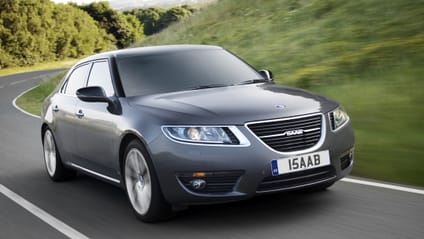
Of course, nothing will ever truly be like a Saab except for, well, a Saab. Not even lasting two years in production before the company went under, the handsome second-gen 9-5 was a left-field but genuinely compelling alternative to the usual German suspects, just like the Polestar 2 is today. Unlike the Polestar, though, a used 9-5 won’t set you back at least £45k.
The Morgan Supersport is a superb blend of old and new. On the one hand, you get the latest interpretation of Morgan’s signature olde worlde shape and a lusty straight-six engine, and on the other, a lightweight aluminium chassis and performance and handling absolutely on a par with the current sports car crop. The only issue is that you’re paying six figures for something that’s realistically going to be a weekend toy at most.
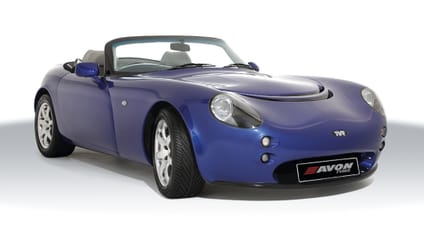
For a similar dose of handbuilt British eccentricity, lairy straight-six power and retro-futurist looks, there’s only one place to look: late-era TVR, with its absurd UFO styling and psychedelic colour-flip paints. We’d argue the closest thing in spirit to the Morgan is the rare Tamora roadster, complete with TVR’s 350bhp, 3.6-litre Speed Six motor. Yours from circa £25k, if you can find one.
You might not even have noticed it happening, but unashamedly vast load-lugging estates have been dropping like the proverbial from the new car market. It leaves the Skoda Superb Estate as easily the best for its blend of value, practicality, quality and, in 261bhp Golf GTI-engined all-wheel drive form, performance.
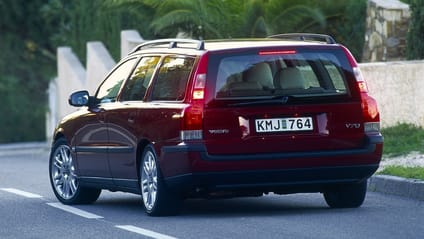
There was a time when Volvo was the undisputed champion of the big estate, and without the best part of £40k to spend on a new Superb, it’s still very hard to go wrong with a used V70. Find one with the D5 five-pot diesel for good economy and legendary reliability, or the slightly mad 296bhp V70 R for the incongruity of a car shaped like a wardrobe that’ll outrun sports cars.

Swanky bits of cities all over Europe were awash with the electric Fiat 500e pretty much as soon as it launched, and it’s easy to see why. The retro looks are adorable, the EV power is both clean and effortless, and its size means you can squeeze it into the titchiest parking spaces. The rollback roof on the Cabrio adds to the appeal during summer, too.
We have to imagine at least a few 500e Cabrio owners had a bit of experience with the Nissan Figaro, a similarly slow and impractical but almost unbearably cute retro drop-top with a sardine tin roof. Officially only sold in Japan, there’s an absolute cult around them in Britain and though numbers are dropping, enough people live in Primrose Hill for a steady supply to remain.
The Aston Martin Vanquish is quite simply the best grand tourer on sale right now. Heck, it even came out on top of our head to head with the Ferrari 12Cilindri. Even if that wasn’t the case, any big, elegant GT car with a V12 under its endless bonnet deserves to be celebrated in 2026. There’s just one small problem. Well, 330,000 of them, actually.
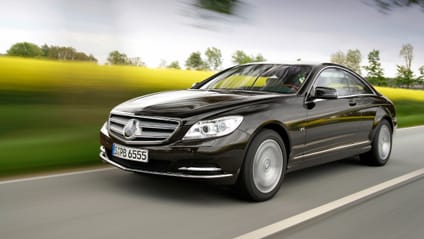
Look, we’re not trying to claim that a 20-year-old CL600 is going to perform anything like a brand new Vanquish, or that spending supermini money on a twin-turbo V12 Mercedes will be a risk-free endeavour. But on the days when nothing breaks, cruising along in the effortless serenity and comfort offered by one of these big old bruisers, we’re really not sure you’d feel £300k worse off than you would in the Aston.
It may narrowly lose out in the ultimate luxury stakes to a Rolls-Royce Ghost, but the Bentley Flying Spur counters with driver appeal, making it just about the ultimate ultra-luxe saloon car in 2026, especially with a V8 soundtrack to warm the cockles of your heart. Big, comfy, quick and just sitting on the right side of the tasteful/gaudy divide, this is Bentley at its best.
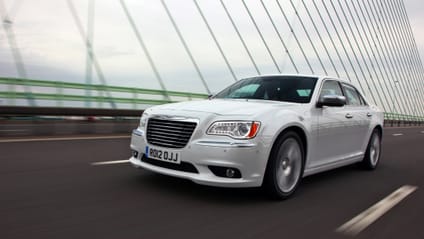
You know what else is big, comfy, quick(ish) and… actually, let’s ignore the tasteful/gaudy bit for now. Widely noted (okay, mocked) for its Bentley-aping styling at launch, the appeal of the Chrysler 300C has grown somewhat over the years as the pool of affordable V8-powered luxury saloons has shrunk. Our advice is to ignore the mockery, and indulge in this roomy cruiser fitted out with one of the all-time great powerplants.
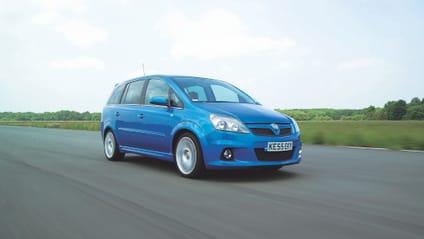
Let’s say you’ve been, erm, reproductively productive, and now have several small humans to cart around. You still want something quick, but don’t want to follow the crowd into an SUV. Well done you – your best bet among new cars is the 335bhp, dual-motor GTX version of the Volkswagen ID Buzz, which will whisk you to 62mph in a spritely 6.1 seconds. That’ll be ALMOST SEVENTY THOUSAND POUNDS, please. Ouch.
For a similarly spritely seven-seater for a lot less cash, you could track down a slightly unhinged 237bhp VXR version of the Vauxhall Zafira. Hitting 62mph in 7.2 seconds as standard, it’s not too far off the Buzz’s performance, and while it may not have the style of the big Volkswagen, it makes up for it with, erm… torquesteer. Lots and lots of torquesteer.

A delightfully unexpected addition to Lexus’ European range, the Lexus LM is something that’s been popular across much of Asia for a while now: a big, posh van. It’s a bit more of a niche prospect over here, especially when it costs £97,645 for the ‘basic’ seven-seater, and a whole lot more for the one with two private jet-style seats in the back.
Of course, there must be a business case for the LM over here, or Lexus wouldn’t bother importing it. That decision was doubtless driven by the increasing number of UK grey imports of the car it’s based on, the Toyota Alphard. Basic versions of this big ol’ van start at around £5,000, but for about twice that, you can track down a posh Royal Lounge version with the buznuss-class seats in the back.

The new electric Renault 5 felt like the next modern Mini moment, capturing hearts all over Europe with its perfectly-executed retro styling, fun handling and upmarket interior. It’s been a runaway success for Renault, helped along by prices starting at £21,495 (including the EV grant), making it one of the best value for money little EVs around.
We can do better than that, though. If you want a car that represents a Mini moment for the industry, why not just get a Mini? The original R50-shape BMW-developed hatch is one of those cars that proves you don’t have to spend big money to get brilliant handling, and its design is just getting better by the day, especially given the lightly challenging looks of the current model. Inspired by a classic, we’d argue it now is one itself.
Rolls’ first SUV has quickly become its best-selling model, because of course it has. The Cullinan is simultaneously wonderful and appalling, an exercise in both utterly exquisite luxury and a complete lack of taste and restraint. The ideal 2020s luxury car, in other words – no wonder it’s been such a success.
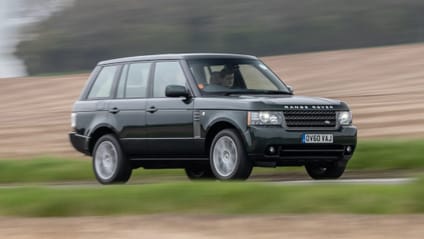
Still, let’s not act like a hugely luxurious British SUV is a new idea. The Range Rover’s been doing it for absolute yonks, and the Range Rover of Range Rovers – the beloved L322 generation – is now a bargain (although you should definitely spend a bit more on one if you can). Sure, it’s not quite the statement of luxurious excess a Cullinan is, but then a Cullinan is one of the only cars likely to make people hate you more than a Rangie.
Speaking of cars that’ll make people hate you… If your only experience of the Urus is of watching them get clogged between the lights in Knightsbridge, then we entirely understand your disdain. There’s no denying, though, that it’s a staggeringly capable car, blending SUV space with performance worthy of the Lambo badge. Then again, it better do with an entry point north of £200k.
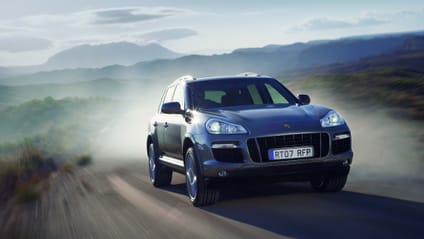
You can blame the original Porsche Cayenne for the absolute explosion in sports car makers rolling out SUVs, but thank it for the fact that most of them have handling that defies all laws of physics. Especially in 450bhp Turbo guise, it’s been the template for every Urus, Levante, DBX and even Purosangue in the years since, and with prices now from as little as £7,000, it can give you a taste of those cars for a whole lot less.
Nearly all the discussion around the Ferrari Purosangue hinged around it being Maranello’s first SUV, with less airtime given to the fact that it effectively ended Ferrari’s illustrious lineage of elegant, V12-powered 2+2 grand tourers, which culminated in the bizarre but excellent FF and GTC4Lusso shooting brakes. This made us very sad, but the market wants what it wants.
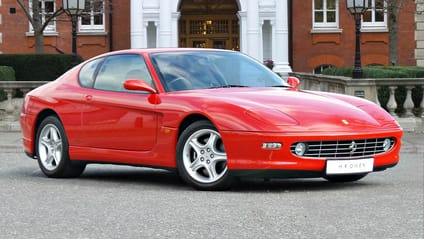
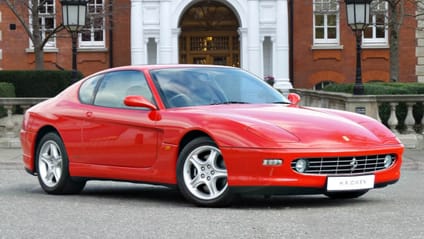
Superseding the Mondial for the dubious honour of Cheapest Ferrari You Can Buy, the 456 is part of that lineage that was brought to an abrupt halt by the Purosangue. It remains one of the more unloved Fezzas, which we think is a shame – it’s got understated styling, a glorious 5.5-litre V12, and can be bought nowadays from as little as £35k. What’s not to like? What’s that? Running costs? Oh.
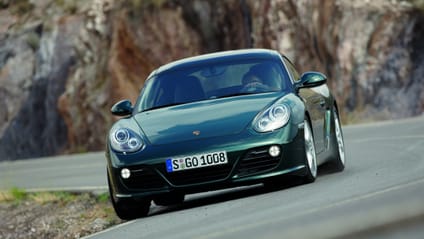
With the 718 consigned to the history books for now and a replacement still a way off (especially with petrol power), the 911 Carrera now returns to its old position as the entry point into a Porsche sports car. Which brings us on to the fact that a boggo 911 Carrera, with zero options, is now £103,700. Flipping, and indeed, heck.
Even as prices begin their inevitable upwards creep, the original Porsche Cayman still represents a hugely compelling used buy. Just like a new 911 Carrera, you get a flat-six – this one unburdened by turbos, and hooked as standard to a manual – and a beautifully balanced chassis. The people who still write it off as the Porsche for people who can’t afford a 911 don’t know what they’re missing.
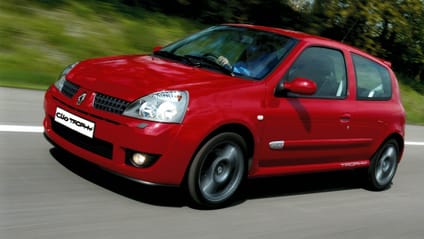
The Manthey upgrade for the Porsche 911 GT3 RS, developed by the factory-affiliated Nürburgring-based outfit with a penchant for Porsche performance, takes an already extreme car and turns it into just about the closest thing you can get to a fully-fledged GT3 racing car that can still have number plates. It’s about as extreme as road-legal track cars get.
Here’s the thing, though: you’re not Porsche factory test driver Jörg Bergmeister. Unless you are, in which case ignore this part, Jörg. Assuming you’re not, though, you’ll probably run out of talent long before a Manthey-kitted GT3 RS does – and anyway, who’s got that much to spend on a track day toy? You’ll have just as much fun with a ratty Clio 182 and a set of half-decent track tyres. Trust us.
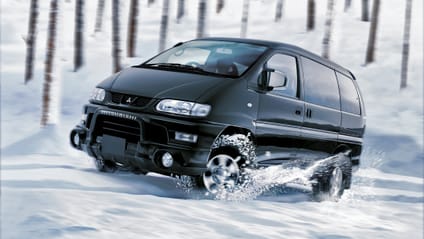
Take your pick of whichever aftermarket converter you like – let’s take the £88,340 Hymer Grand Canyon S as an example. These go-anywhere, sleep-anywhere Sprinters are the ultimate status symbol among the £350-flannel-shirt-wearing, ‘we gave up our day jobs in finance to find nature’ crowd, largely because they’re the only people who can afford one.
Enter the Mitsubishi Delica Space Gear as our budget alternative hero, essentially the rugged running gear from a Shogun shoved into a people carrier. People were importing these and turning them into go-anywhere campers long before Instagram turned hashtag van life into a thing, but the social media effect means demand is rising. You can still get them for comfortably under £10k, though. Some curtains and an airbed later, you’ll be laughing.
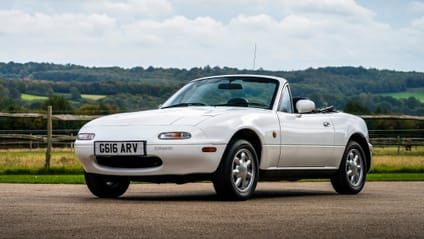
The continued existence of the Mazda MX-5 warms our hearts more than ever in a market otherwise starved of lightweight, simple and affordable sports cars. That lack of rivals is partly down to regulatory pressure and partly because the MX-5 has simply always been so good that there was no point in anyone else trying. Which means that…
…yeah. Look, many other highly commendable little roadsters have come and gone since the MX-5 first appeared in 1989, but there’s a very good reason the Mazda outsold, and outlived, them all. It’s because simply none of them managed to nail the recipe in quite the same way, and that means pretty much the only used car that’s anything like an MX-5 is… an MX-5.
Get all the latest news, reviews and exclusives, direct to your inbox.