



Advertisement
“Electric turbos ensure this is not only the fastest, but most drivable 911 Turbo there’s ever been”
Good stuff
Engine response and power, peerless road manners and capabilities, about as practical as a supercar can get
Bad stuff
Weight has gone up a chunk, so has price. No standard Turbo any more
Overview
What is it?
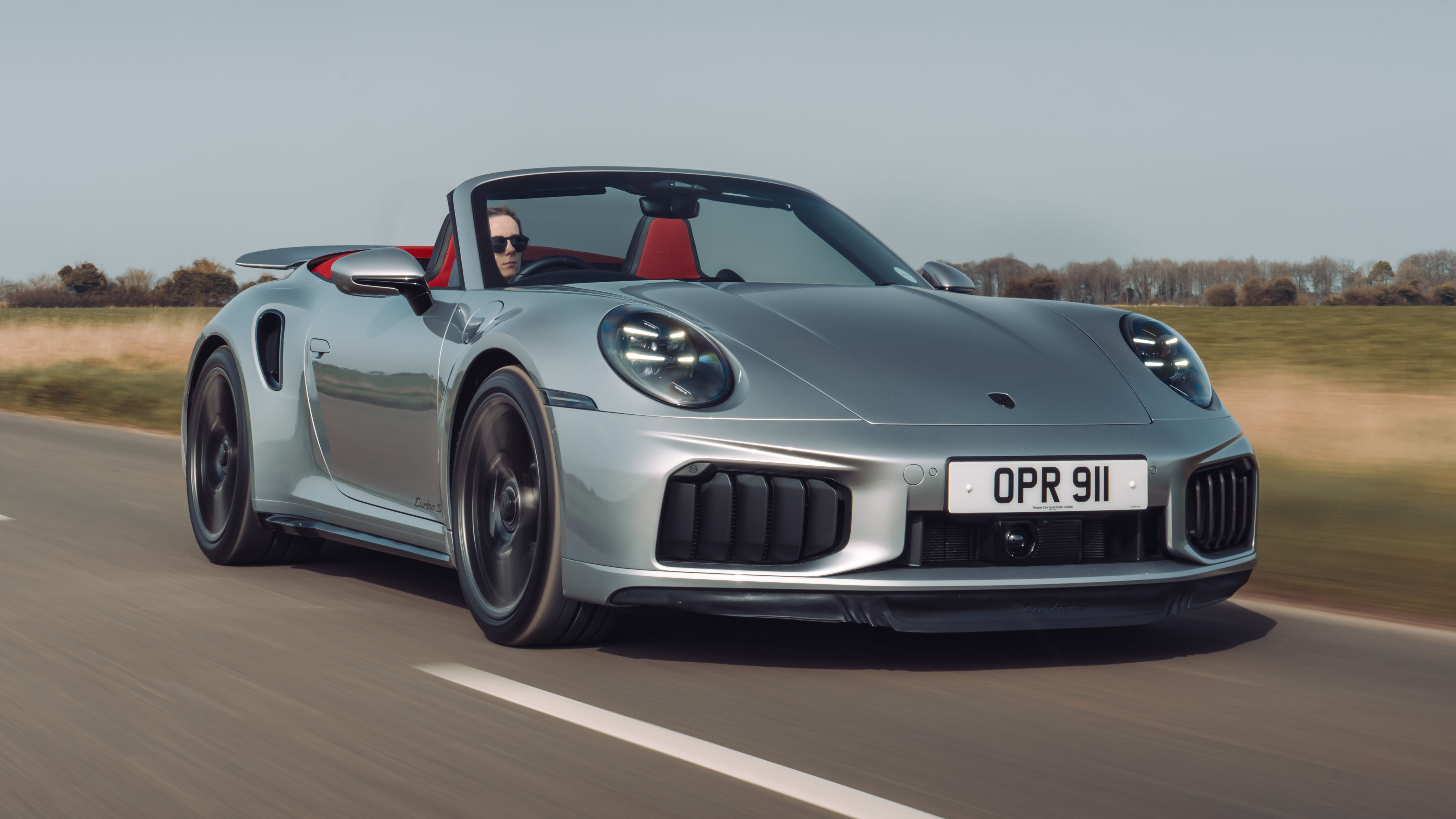
The newest, most powerful, most technical and lightly psychotic version of the legendary Porsche 911 Turbo. Now midway through the 992's lifespan, it’s been significantly updated.
This time there’s only one model, the Turbo S, and there’s a fair bit more stuffed into this car than just the usual twin-turbos and gobs of boost. As ever there’s all-wheel drive, a flat-six in the back and all the daily usability you could ever wish for. But it’s also got secrets. Dark secrets.
Advertisement - Page continues below
It doesn’t look that out-there though?
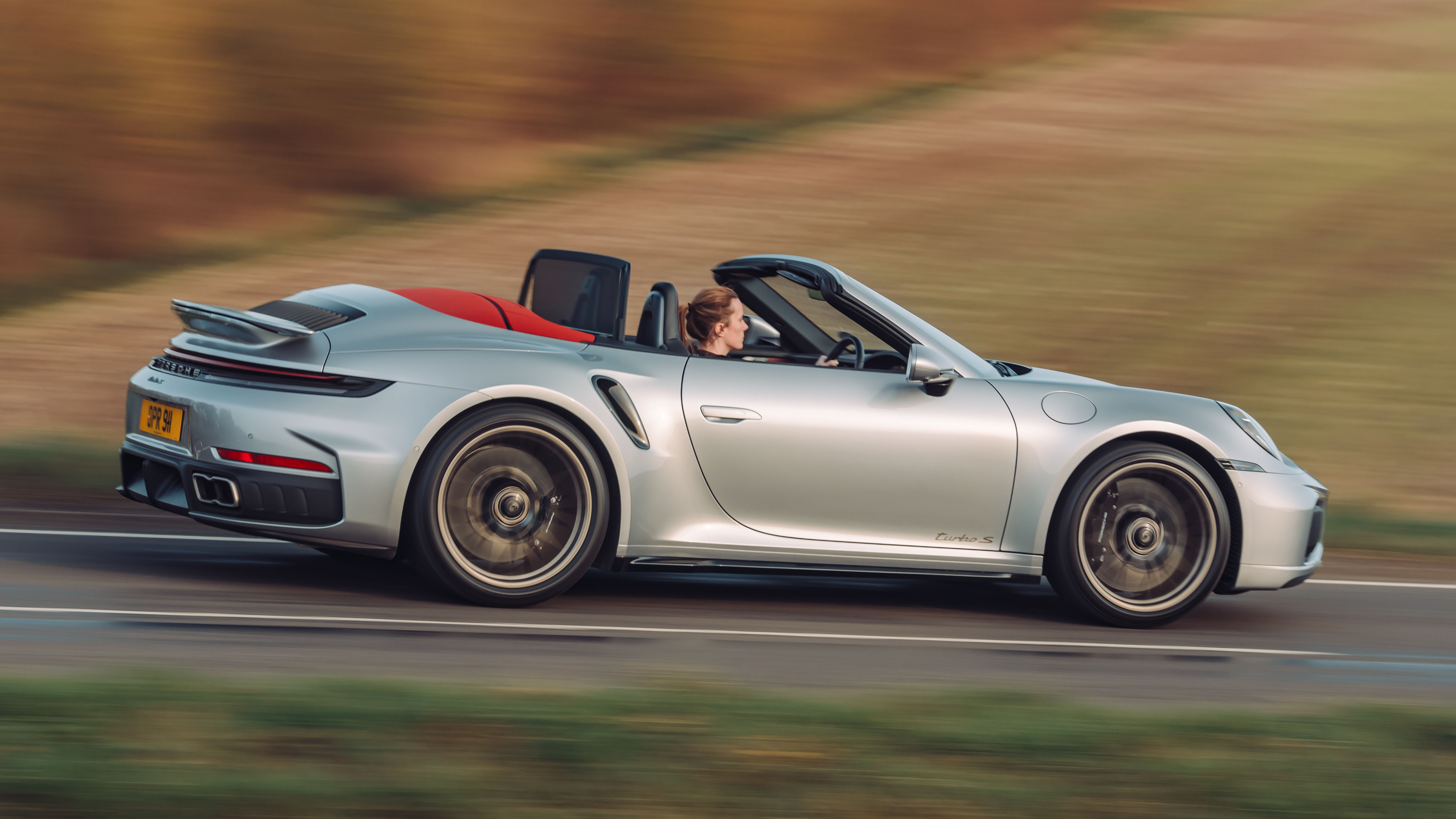
Don’t be fooled. This is not your GT-series car with a massive wing, with which you tend to look like a bit of a prat when popping to Asda for teacakes and milk. Instead, it’s relatively subtle, conservative and unlikely to be remarked upon when passed in the street.
But it’s also a bit like a serial killer that everyone describes as ‘quiet’ just after some sort of bloody rampage: it might look normal, but it’s capable of murdering a backroad with very little conscience.
Powerful, then?
Very. The most powerful series production 911 there’s ever been, the first to crack 700bhp (albeit by precisely 1bhp) and undeniably one of the most efficient ways of dismantling a road. There, that doesn’t glorify speed too much, does it? It’s done this despite using a smaller engine, a 3.6-litre flat six, rather than a 3.8.
So to those secrets. Electrically driven turbos. No waiting for the exhaust gases to get going, just spin the compressors with electric motors to force air straight into the combustion chamber. Once it’s got that initial lag-beating shove out the way, the exhaust gases take over.
Advertisement - Page continues below
But there’s more. The turbos also act as generators when off-boost, siphoning power back to a 1.9kWh battery. That battery powers this T-hybrid system, which also features an 80bhp/139lb ft motor spliced into the eight-speed PDK transmission – again something that aids response.
We’ve seen this before, haven’t we?
The basic engine comes from the Carrera GTS where it has a single turbo, but Porsche hasn’t let the tech stand still. The Turbo S uses smaller turbos, but spins them faster – at up to 145,000rpm rather than 120,000rpm. The end result is 701bhp (711PS) and 590lb ft. That’s a 60bhp gain from the outgoing car and although torque is the same, it now arrives 200rpm sooner (2,300rpm) and lasts 2,000rpm longer (6,000rpm).
You can choose between coupe and convertible, and both are absurdly fast. The headline figures for the coupe are 0-62mph in 2.5 seconds, 124mph in 8.4s and a 200mph top end. The Cabrio is only a tenth or two behind.
How does the chassis cope?
With difficulty. Launch control is devastating. Not only will it strain loose bits of you (please rest your head before take-off), but unless the tyres are warm and the surface perfect, it can get a bit skewy as the wheels hunt for traction. Don’t worry, it’s not a sign of things to come. Because the big news is how stable, lightfooted and confidence-inspiring the set-up is. Bluntly, the Turbo S makes you feel like a superhero, and then doesn’t punish you for accidentally wearing your pants outside your trousers.
You can’t put absolute stock by Nürburgring Nordschleife times, but this Turbo S is some 14 seconds faster than the last one at about 7min 03s. FOURTEEN. And that’s a scary bit of tarmac that’s more like a road than a racetrack. That can’t be ignored.
But is there still turbo lag?
There is, but it’s had a useful dose of torque fill. Hit the throttle now and the response is immediate, but it’s not the full ticket – the electrics don’t seem to deliver quite the same turbo thrust as the exhaust gases, so you have a kind of two-step strategy, where the first gets you going, then the second slams home.
Keep the revs high and it’s almost like an anti-lag system. You can morse code the throttle through corners and it’ll respond to every twitch. More on all this in the Driving tab.
How does it compare to the outgoing Turbo S?
We reckon it’s very slightly softer-centred. The 992.1 made a virtue of its lag, then felt like a toughened charger, digging in and ripping the road to shreds. This rides with a bit more give, has better manners and generally comes across as a fraction more civilised. Less tyre roar, more attuned to cruising.
It’s also heavier to the tune of about 85kg, which means the Turbo S Cab is now 1,810kg (the Coupe is 1,725kg). That’s the drawback of the electrics. The other gain is the efficiency, because both CO2 (from 262g/km dependent on spec) and economy (24.4mpg) have improved. Not by much admittedly, and Porsche has said this is about adding performance not subtracting CO2, but it still allows a 700bhp car to navigate the legislation and future-proof itself. Expect many other turbo engines across the Porsche range to follow suit.
What’s it like inside?
We can’t address this without first addressing the price.
OK, how much does it cost?
£199,100. Another £10k for the Cabrio. This is a decent climb – almost £20k more than its predecessor and with no entry-level Turbo on the horizon, leaves a big gap below, moving the 911 into a rarefied area where it meets some fairly bespoke rivals that both look and feel more special than this. May not be as well built and engineered, but have raw kerb appeal the 911 can’t match. We’ll come back to this shortly.
It’s the same in here as any other 911. Yes, there’s more kit as standard, but the vibe, the feel and quality, is the same. And for £200k it’s too ordinary. It all works flawlessly, there’s space and logical layouts and all the rest, but you get that in a Toyota. Here you expect a bit more. Head to the Interior tab for more detail on this.
What rivals does the Turbo S have?
Many and varied. And some look rather good value alongside it. Take the Bentley Conti GT – a full plug-in hybrid with 671bhp and lashings of lux for £202,565. Or how about the 656bhp, £165k Aston Martin Vantage? We love that car – in a twin test it ran the last 911 Turbo S very close indeed. And now undercuts this one by £35k. That’s a lot of options you can add.
A McLaren Artura – there’s a rare beast, a genuine mid-engined supercar with almost as much power and considerably less weight for £221,000. Bet there are discounts to be had there, too. Hell, even the latest Ferrari Amalfi is in the same ballpark at £202,459. All now look better value alongside a 911 Turbo that doesn’t seem to be worried about having a price advantage over the opposition.
Confident move, you’ve got to say – and usually upheld come residual time. Five year old 911 Turbos are still fetching £140,000. So despite costing less originally, they’re now worth more than the rivals mentioned above. Expect more of the same this time round.
What's the verdict?
“This one deserves to inherit the throne as the best everyday supercar of them all”
It is, as ever, the fastest and most complete daily supercar money can buy. The changes made for the 992.2 generation have made it more adaptable and easy-going. It’s also quieter and rides better. Yet when the mood takes you it transforms into the most devastating deconstructor of roads and demonic supplier of speed.
The new T-Hybrid turbos have played a key part here. Engine response is, quite literally, electric, and the gains to drivability are marked. But while the new engine reduces lag, it also reduces character. Not a lot, and for most buyers the trade off is one they’ll be more than happy with – and happy to pay for. Porsche engineers cars to greater depth and with more consideration for how people use their cars, than any other firm.
The last Turbo was, in the tiny separations between 911 models and generations, an outlier. It was attack minded, won our Performance Car of the Year award in 2020. This one is faster, but a mite less memorable. Still, we’re splitting hairs here. Or heirs. Because this one deserves to inherit the throne as the best everyday supercar of them all.
The Rivals

Trending this week
- Car Review
Volvo ES90